
Emery County Deed Records and Property Documents
Emery County deed records are kept by the County Recorder's Office in Castle Dale, the county seat. Located in central Utah's canyon country, Emery County has a land record history shaped by coal mining, ranching, and a landscape that includes sections of the San Rafael Swell. Deed records filed in Castle Dale cover warranty deeds, quitclaim deeds, trust deeds, liens, and mining-related documents that reflect the county's industrial past. Under Utah law, all of these instruments are public records, and any person may inspect them without giving a reason. Emery County was established in 1880 and named for George W. Emery, who served as governor of Utah Territory from 1875 to 1880.
Emery County Quick Facts
Recording Laws That Govern Emery County Deed Records
Utah law establishes a race-notice recording system for all real property instruments. Utah Code Title 57 sets out the framework that applies in every county, including Emery. Section 57-3-101 requires that any document affecting real property be recorded with the county recorder in the county where the land is situated. Filing with the Emery County Recorder gives a deed its legal priority over later instruments. Section 57-3-102 states that a recorded document imparts constructive notice to all persons, which means the law treats everyone as having knowledge of a recorded deed even if they never personally reviewed the index. Section 57-3-103 makes an unrecorded deed void against a subsequent good-faith buyer who records their own deed first.
These rules are the backbone of a clean title system. They give buyers confidence that a recorded deed will be protected, and they give lenders assurance that a trust deed securing a loan will hold priority if the borrower defaults. Emery County deed records are available to the public under GRAMA, the Government Records Access and Management Act. GRAMA classifies deed records as public records by default, which means the Recorder's Office cannot refuse a reasonable request for access to filed instruments. Researchers, buyers, attorneys, and title companies all rely on this open-records framework to conduct property due diligence.
Mining Documents in Emery County Deed Records
Coal has been central to Emery County's economy since the late 1800s. That history is written into the county's deed records. Mining claims, mining patents, and coal lease instruments make up a significant portion of older filings in the Recorder's index. A mining claim recorded with the Recorder gives the claimant notice rights over other parties who might later assert competing interests in the same mineral deposits. When a mining claim was converted to a patent through the federal land patent process, that patent was typically recorded with the county recorder to establish it in the local chain of title.
The BLM Utah Land Patents database contains the original federal patents that transferred public domain land into private ownership across Emery County. Many of those patents governed land that was later developed for mining or ranching, and the instruments appear in the early pages of the Recorder's deed index. Buyers of property in areas with a mining history should review not only the standard deed chain but also any mineral deeds, lease assignments, or surface use agreements that may have been filed alongside ownership transfers. A severed mineral estate can be owned independently of the surface, and both interests must be traced separately in the deed records to understand what a buyer is actually acquiring.
Note: Mining claims must also be recorded with the BLM in addition to the county recorder, so a full mineral title search requires checking both sources.
Emery County Recorder Contact Information
| Office | Emery County Recorder's Office |
|---|---|
| Mailing Address | PO Box 698, Castle Dale, UT 84513 |
| Phone | (435) 381-3520 |
| Documents Recorded | Deeds, mortgages, liens, mining documents |
| Certified Copies | Available upon request |
| Records Available From | 1880 (historical records at Utah State Archives) |
Accessing Historical Emery County Deed Records
The Utah State Archives holds historical deed records from Emery County dating back to 1880. For researchers tracing ownership of land that passed through multiple hands over more than a century, the Archives provides access to instruments that may not be available in the county's digital index. Early deed records are often recorded in large bound volumes indexed by grantee and grantor name. The Archives preserves these volumes for all 29 Utah counties and can assist researchers in locating specific instruments by name, date range, or property description.
The Utah State Archives holds historical deed records from Emery County dating to 1880, including instruments predating digital indexing.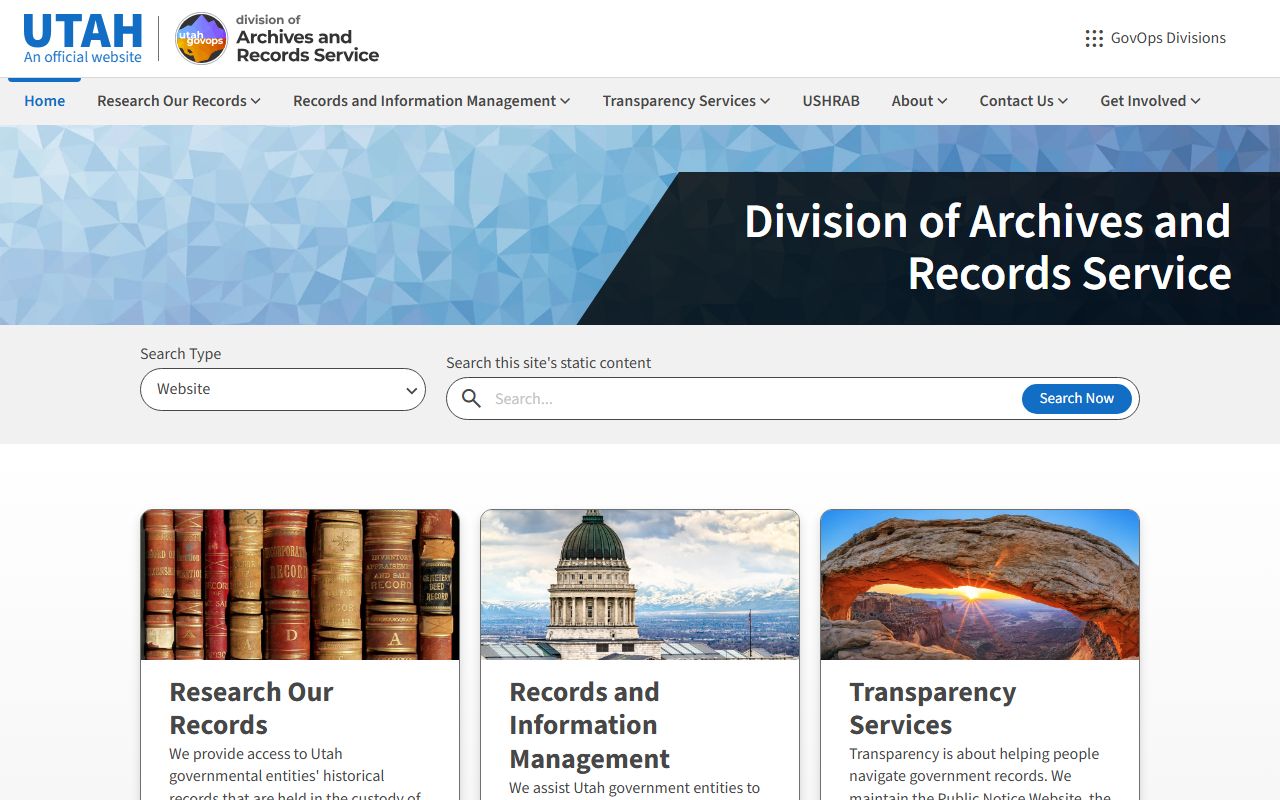
Researchers working on older Emery County property chains can access historical deed records at the Utah State Archives, which preserves instruments from all 29 Utah counties.
Statewide parcel data from Utah GIS helps link parcel numbers from current county records to the land descriptions in older deed instruments. This is especially useful in Emery County where large rural parcels often carry legal descriptions written in quarter-section or metes-and-bounds language from early surveys. Pairing GIS boundary data with deed record text allows researchers to confirm that an older instrument covers the same ground as the current parcel boundary. The Utah Division of Water Rights maintains a separate registry for water rights, which are often mentioned in Emery County agricultural deed records but must be researched through the state water rights system independently.
Emery County Assessor and Property Valuation
The Emery County Assessor's Office, at 75 E Main Street in Castle Dale and reachable at (435) 381-2414, assigns values to each parcel for property tax purposes. Assessor records use the same parcel numbers that appear in the deed index, so cross-referencing the two systems is straightforward. Mining and industrial property assessments are a distinct part of the Assessor's workload in Emery County because the county continues to host significant energy infrastructure. Agricultural parcels are assessed under a preferential rate when the land is actively farmed or grazed, a classification that buyers should verify in the deed records and Assessor rolls before closing.
The Utah Tax Commission sets the assessment standards that Emery County's Assessor applies. The Commission also hears property tax appeals and publishes guidance on valuation methods for different property classes. Buyers who find discrepancies between the value shown in Assessor records and a recent appraisal may have grounds to appeal. Deed records from the county recorder and valuation records from the Assessor together give a complete picture of a property's legal status and tax obligations.
Property Deed Records and Land Use in Emery County
Emery County's land is a mix of private holdings, state school trust lands, and large blocks of federal land managed by the BLM and the U.S. Forest Service. That patchwork shows up clearly in the county's deed records. Parcels that were once part of the public domain carry a chain of title that begins with a federal land patent and then tracks successive private transfers through the Recorder's index. Other parcels may show state land board conveyances, which transferred title from the state school trust to private parties. Understanding which agency originally held a parcel helps researchers choose the right starting point for a title search.
The Green River corridor in Emery County has seen growing interest from buyers seeking recreational property. Deed records for land near the river may show easements granted to utility companies or right-of-way dedications to the county for road access. These encumbrances are part of the permanent record and remain binding on successor owners unless formally released through a new instrument recorded with the Recorder. Any buyer should review the full deed record file for a parcel before closing to confirm that no undisclosed encumbrances exist in the chain of title.
The Utah Tax Commission provides property tax information that complements Emery County deed records for buyers researching property obligations.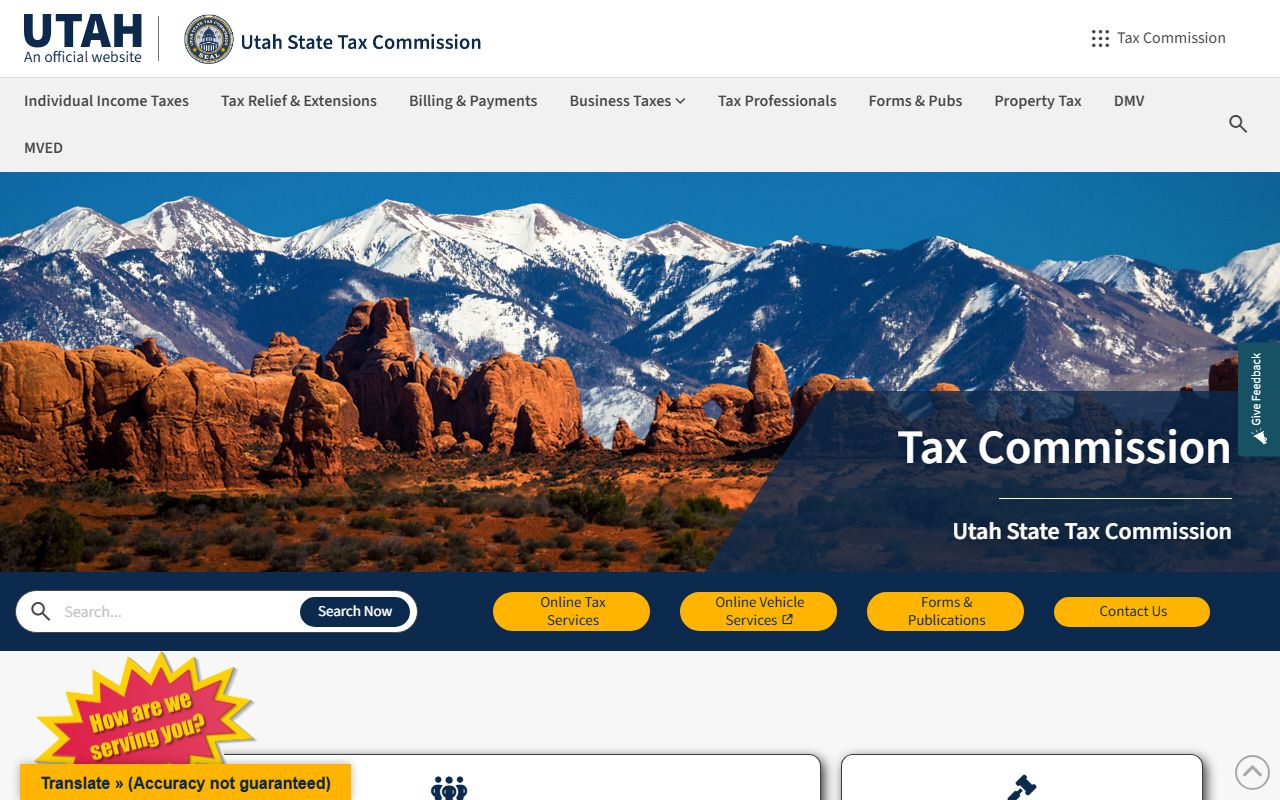
Utah Tax Commission records and Emery County deed records together provide a full picture of a property's ownership history and current tax status for buyers and researchers.
Note: State school trust lands in Emery County are managed by the Utah School and Institutional Trust Lands Administration and are not included in the county recorder's deed index unless they have been conveyed to private ownership.
Search Deed Records Now
Nearby Counties
Emery County shares borders with several central Utah counties. Each maintains its own deed records under the same Utah recording statutes.
View All 29 Counties