
Piute County Deed Records
Piute County deed records document the ownership and transfer of real property across one of Utah's most rural and least populous counties. The county was established in 1865, and its recorder's office has kept property records since that time. Warranty deeds, quitclaim deeds, trust deeds, liens, and easements are all part of the public record. Under Utah Code Title 57, every document affecting real property in Piute County must be recorded with the County Recorder to provide constructive notice to third parties. The county seat is Junction, a small town in the heart of south-central Utah.
Piute County Quick Facts
About Piute County Deed Records
Piute County is one of the smallest counties in Utah by population. It sits in the south-central part of the state, surrounded by rugged canyon lands and high desert terrain. The county has a long history tied to ranching, dry farming, and small-scale mining. Deed records here reflect those roots. Many parcels are large agricultural tracts or remote recreational properties. Understanding the chain of title in Piute County often requires looking back through decades of recorded deeds, some dating to the late 1800s.
Utah uses a race-notice recording system for property transfers. Under Utah Code § 57-3-103, a subsequent purchaser who records first and had no prior knowledge of an earlier unrecorded deed takes priority. Under § 57-3-102, a recorded document gives constructive notice to all persons of its contents. This framework makes the Piute County Recorder's records critical for any real estate transaction in the county. Buyers, lenders, title companies, and attorneys all rely on the deed records to confirm ownership and identify any liens or encumbrances before closing a deal.
The types of documents recorded in Piute County include warranty deeds, quitclaim deeds, trust deeds, deeds of reconveyance, mechanic's liens, judgment liens, easements, subdivision plats, and mining claims. Because much of the county was originally public domain land, many title chains begin with a federal patent or land grant, followed by years of private transfers recorded at the county level.
Note: Piute County is one of Utah's least populous counties, and the recorder's office is small. Calling ahead before an in-person visit can save time and help confirm current hours and copy fees.
Piute County Recorder's Office
The Piute County Recorder's Office is the official repository for all land records in the county. Staff record incoming documents, maintain the county's deed indexes, and provide certified copies to members of the public. The office records deeds, mortgages, liens, easements, and other instruments affecting real property in Piute County. Because the county is rural and the office is small, service is often direct and personal. Staff can assist with searches of the deed indexes and help locate specific parcels using legal descriptions or parcel serial numbers.
To record a document in Piute County, it must meet the requirements set out under Utah law. The document must carry original signatures with a notary acknowledgment. It must include a full legal description of the property and a parcel serial number issued by the Piute County Assessor. The grantee's mailing address is also required. Documents that fail any of these requirements may be rejected at the counter. Under § 57-3-101, a document affecting real property must be filed with the county recorder to be part of the official chain of title and to give constructive notice to future purchasers.
| Address | PO Box 116, Junction, UT 84740 |
|---|---|
| Phone | (435) 577-2505 |
| Documents Recorded | Deeds, mortgages, liens, easements, and other land records |
| Copies | Available upon request; fees apply |
Piute County Assessor and Property Information
The Piute County Assessor's Office works alongside the recorder to maintain a complete picture of real property in the county. While the recorder tracks ownership and encumbrances, the assessor determines the taxable value of each parcel. In Piute County, a large share of taxable property consists of agricultural land and recreational parcels. Rangeland, irrigated farm fields, and hunting properties make up a significant portion of the county's private land base. The assessor applies different valuation methods to these property types based on use and productivity.
Property owners with agricultural land may qualify for greenbelt assessment under Utah's Farmland Assessment Act. This program values qualifying land at its agricultural use value rather than its market value, which can reduce property tax bills substantially for ranches and farms in Piute County. Changes in ownership that result in a loss of agricultural use can trigger rollback taxes on those parcels. Buyers of agricultural property should review the deed records and assessor records together to understand any potential tax consequences of a purchase.
| Address | 550 North Main St., Junction, UT 84740 |
|---|---|
| Phone | (435) 577-2521 |
| Focus | Agricultural and recreational property assessments |
Note: The Piute County Assessor and Recorder are both located in the Junction area. Contact the assessor directly for questions about parcel serial numbers, which are required on recorded documents.
Federal Land and BLM Deed Records in Piute County
A large portion of Piute County is federal land managed by the Bureau of Land Management. The BLM controls grazing allotments, mineral rights, and public access routes across much of the county. For property researchers, this means that many title chains in Piute County begin with a federal land patent rather than a state or private deed. The original transfer from the federal government to a private owner is the root of title in most cases, and finding that document is an essential step in building a complete chain of title.
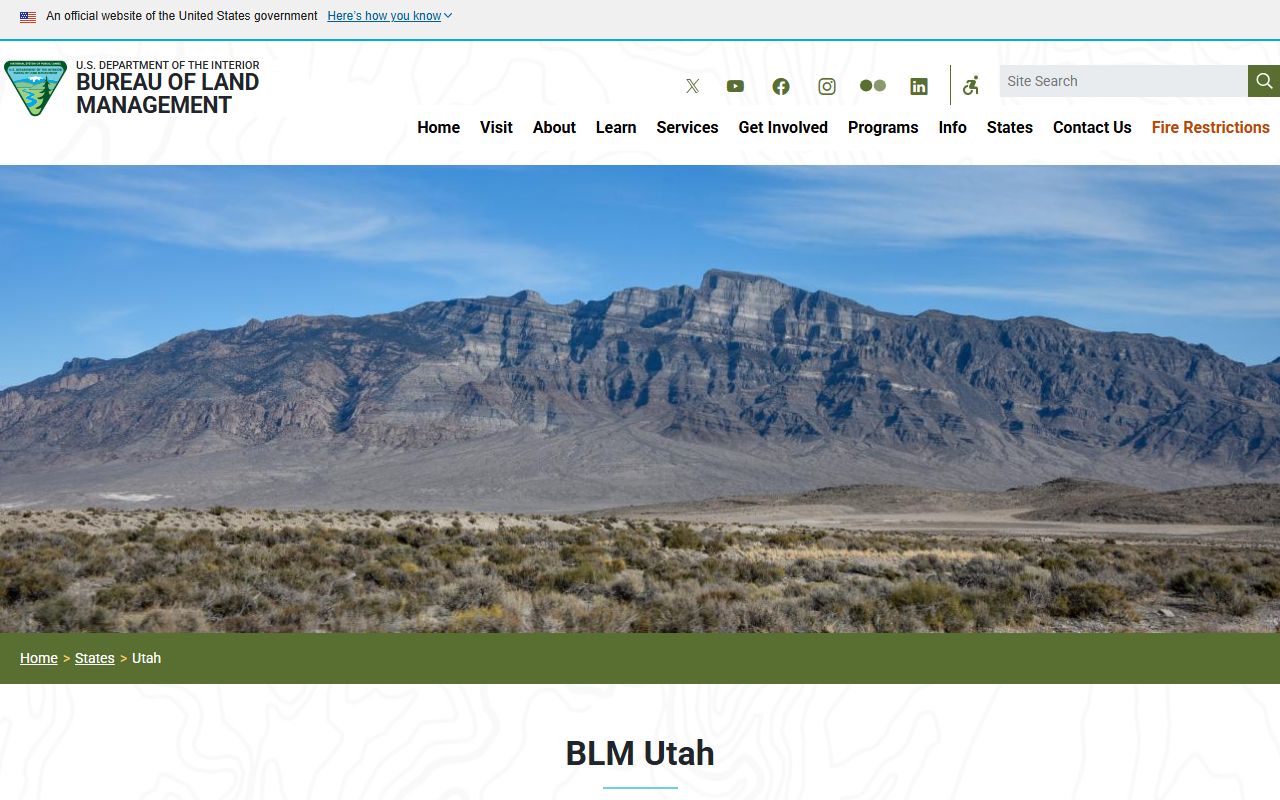
The BLM's General Land Office records, available through the BLM website, include digitized land patents for Utah going back to the territorial period. These records complement the Piute County deed records held at the recorder's office, especially for parcels that were homesteaded or disposed of through federal land programs in the late 1800s and early 1900s. Researchers tracing title on remote ranches or mining claims in Piute County often find the BLM records an essential starting point before working through the county's deed index.
Grazing leases and mineral rights are also a factor in many Piute County property transactions. While grazing leases on BLM land do not convey ownership of the land itself, they are often tied to a ranch's value and may be referenced in deed records or appurtenant agreements. Buyers of large ranches in the area should confirm the status of any BLM grazing permits as part of their due diligence.
Historical Deed Records and State Archives
The Utah State Archives preserves historical government records from all 29 Utah counties, including older property and land records that predate or supplement the county recorder's holdings. For Piute County, which has been keeping records since 1865, the State Archives can provide context for early property transfers, territorial land disposals, and government records that touch on land use and ownership in the county's earliest decades.

Researchers working on genealogy projects or tracing the history of a ranch or homestead in Piute County may find the State Archives a useful companion to the recorder's deed index. The archives hold records that are not always duplicated at the county level, including some surveyor and land office records from the territorial era. Searching both the county recorder and the State Archives gives the most complete picture of Piute County's property history.
Note: Under GRAMA § 63G-2-102, deed records in Piute County are classified as public records and are available to any person who requests them.
Deed Types Recorded in Piute County
Several types of deeds and property instruments appear regularly in the Piute County deed records. A warranty deed is the most common type used in standard real estate sales. The seller, or grantor, promises that the title is clear and agrees to defend the buyer against any future claims that arise from the grantor's period of ownership. This type of deed provides the strongest protection for buyers and is typically required by lenders when financing a purchase.
Quitclaim deeds transfer whatever interest the grantor holds at the time of signing, with no warranty. They are often used in family transfers, estate settlements, and situations where a party wants to clear up a cloud on the title. In Piute County, quitclaim deeds frequently appear in family ranch transactions where land passes between generations without a formal sale. Trust deeds are used when a lender finances a property purchase. The borrower conveys title to a neutral trustee, who holds it until the loan is repaid. When the debt is satisfied, a deed of reconveyance is recorded to release the lien and return clear title to the borrower.
Easements are also a common feature of Piute County deed records. Given the county's remote geography, access easements across neighboring parcels are frequent. Irrigation ditches, power lines, and road rights-of-way appear in easement agreements recorded alongside standard property deeds. Subdivision plats, though less common than in urban counties, are also part of the recorder's files for any platted community or rural subdivision in the county.
Utah Law and Piute County Deed Records
Utah's property recording laws are found in Title 57 of the Utah Code. These statutes govern how deeds and other instruments affecting real property must be prepared, acknowledged, and recorded. They also establish the priority rules that determine whose rights prevail when competing claims exist to the same property. The race-notice system under § 57-3-103 means that Piute County deed records are not just a historical archive. They are the live legal record that determines property rights in the county today.
The Government Records Access and Management Act, known as GRAMA, classifies deed records as public records in Utah. Any person may request access to the deed records at the Piute County Recorder's Office without having to state a reason. The recorder may charge a fee for copies but cannot deny access to a properly submitted public records request. This open-records framework reflects the public nature of the recording system and ensures that anyone can verify the ownership status of property in Piute County.
The Utah Division of State History also maintains resources relevant to property research, particularly for older properties with cultural or historical significance. Researchers interested in the early settlement and land use history of Piute County may find the division's collections a useful supplement to deed records research.
Nearby Counties with Deed Records
Piute County borders several other Utah counties. If the property you are researching sits near a county boundary, the neighboring recorder's office may hold relevant documents as well.