
Salt Lake City Deed Records
Salt Lake City is the capital of Utah and the most populous city in the state, home to roughly 200,000 people. It sits at the heart of Salt Lake County, and all property deed records for Salt Lake City addresses are filed and maintained at the county level. The Salt Lake County Recorder holds deed records, trust deeds, liens, easements, and subdivision plats for every parcel inside city limits. Whether you own a home near the Avenues, a commercial lot in the central business district, or a parcel on the west side, the deed record trail begins and ends with the county, not the city.
Salt Lake City Quick Facts
Where Salt Lake City Deed Records Are Kept
Under Utah law, deed records are a county function. Utah Code Title 57 governs the recording of real property documents statewide. Section 57-3-101 states that every document affecting title to real property must be recorded with the county recorder in the county where the land is located. Salt Lake City falls entirely within Salt Lake County, so the Salt Lake County Recorder is the keeper of all deed records for city properties.
The Salt Lake County Recorder operates under the county's Data Services division. The office is located at 2001 South State Street, Suite N1-600, Salt Lake City, UT 84114. You can reach the office by phone at (385) 468-8145. Standard business hours run Monday through Friday, 8:00 AM to 5:00 PM. Online records go back to 1990. Documents recorded before 1990 require an in-person visit or a written records request.
Certified copy fees are straightforward. Standard pages cost $2 each. Vault pages, which are large-format documents like plat maps, cost $5 each. Certification of a document adds another $5. These fees apply whether you request copies in person or by mail.
| Office | Salt Lake County Recorder |
|---|---|
| Address | 2001 South State Street, Suite N1-600, Salt Lake City, UT 84114 |
| Phone | (385) 468-8145 |
| Hours | Monday-Friday, 8:00 AM - 5:00 PM |
| Online Records | Available from 1990 forward |
| Copy Fee | $2 per page; $5 vault page; $5 certification |
Note: Pre-1990 Salt Lake City deed records are not available through the online portal and must be retrieved in person or through a formal written request to the county office.
Salt Lake City Recorder vs. County Recorder
The Salt Lake City Recorder's Office is located at 451 South State Street, Room 124, Salt Lake City, UT 84111. The main phone number is (801) 535-7550. This office has an important civic role, but it does not hold property deed records. The City Recorder is responsible for preserving and certifying official city records: legislative actions of the City Council, mayoral proclamations, municipal ordinances, city resolutions, and the minutes of public meetings.
If you need a copy of a city ordinance, a zoning resolution, or the official record of a council vote, the City Recorder is the right place to call. If you need a copy of a warranty deed, a trust deed, a lien release, or any other document that was recorded against a parcel of land in Salt Lake City, contact the Salt Lake County Recorder instead. This distinction is worth understanding before you make the trip downtown, as the two offices serve very different functions under Utah law.
| Office | Salt Lake City Recorder |
|---|---|
| Address | 451 South State Street, Room 124, Salt Lake City, UT 84111 |
| Phone | (801) 535-7550 |
| Records Kept | City ordinances, resolutions, and council minutes |
| Property Deeds | Not maintained here |
Searching Salt Lake City Deed Records Online
The Salt Lake County Data Services portal gives the public free access to recorded property documents. You can reach the public search portal at apps.saltlakecounty.gov. The system lets you search by grantor name, grantee name, document type, date range, or parcel number. Results display document details, and you can view scanned images of most documents recorded since 1990.
The main Data Services page at slco.org/data-services also provides links to the assessor's parcel database, mapping tools, and other county records systems. These tools work together to give a full picture of a property's ownership history and recorded encumbrances. Using the parcel number from the assessor's database, you can pull all deed records tied to a specific lot without having to sort through multiple name variations.
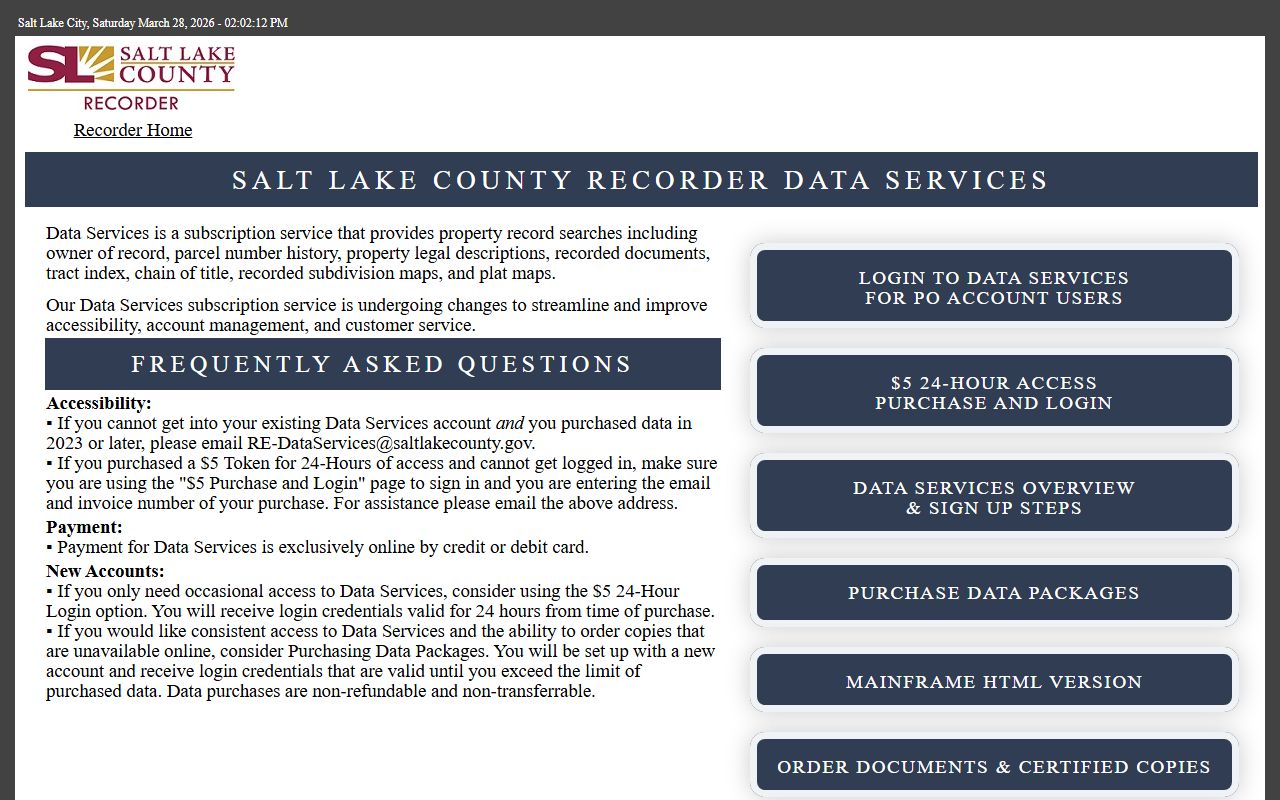
The Salt Lake County Data Services system indexes records by grantor and grantee, so a thorough search should include both the current owner's name and any prior owner names you can identify. Title companies typically run a full chain-of-title search going back 40 to 60 years. For informal research, even a search covering the past 10 to 20 years will surface most relevant recorded documents.
Note: The county online portal covers recorded documents from 1990 forward; older deed records require a visit to the county office or a request through the county's records division.
Types of Deed Records for Salt Lake City Properties
The Salt Lake County Recorder accepts and indexes many types of real property documents. Warranty deeds are the most common form used when a property sells at full market value, as the seller guarantees clear title. Quitclaim deeds transfer whatever interest the grantor holds without making any title warranties, and they show up often in family transfers and divorce settlements. Trust deeds serve as the security instrument for most mortgage loans in Utah, giving the lender a recorded interest in the property until the loan is paid off.
Beyond those core documents, the recorder's index also contains liens of many kinds, including judgment liens, mechanic's liens, and tax liens. Easements granting access rights across a parcel are recorded there as well. Subdivision plats, which define the legal boundaries of each lot in a development, are also part of the county deed records system. Each of these document types appears in the online search portal, and each carries a recording date that establishes its priority under Utah's race-notice recording rules found at Utah Code Section 57-3-103.
Under the race-notice system, a properly recorded document takes priority over a later-discovered but unrecorded interest. This is why prompt recording matters for anyone who purchases property or obtains a lien in Salt Lake City.
Building Permits and Salt Lake City Deed Records
Property deed research sometimes pairs with building permit research, especially when you want to confirm that improvements on a parcel were properly permitted and inspected. Salt Lake City Building Services maintains records of permits issued for construction, renovation, and demolition work on properties within the city. These records can help you understand what work has been done on a parcel and whether it was conducted with the city's approval.
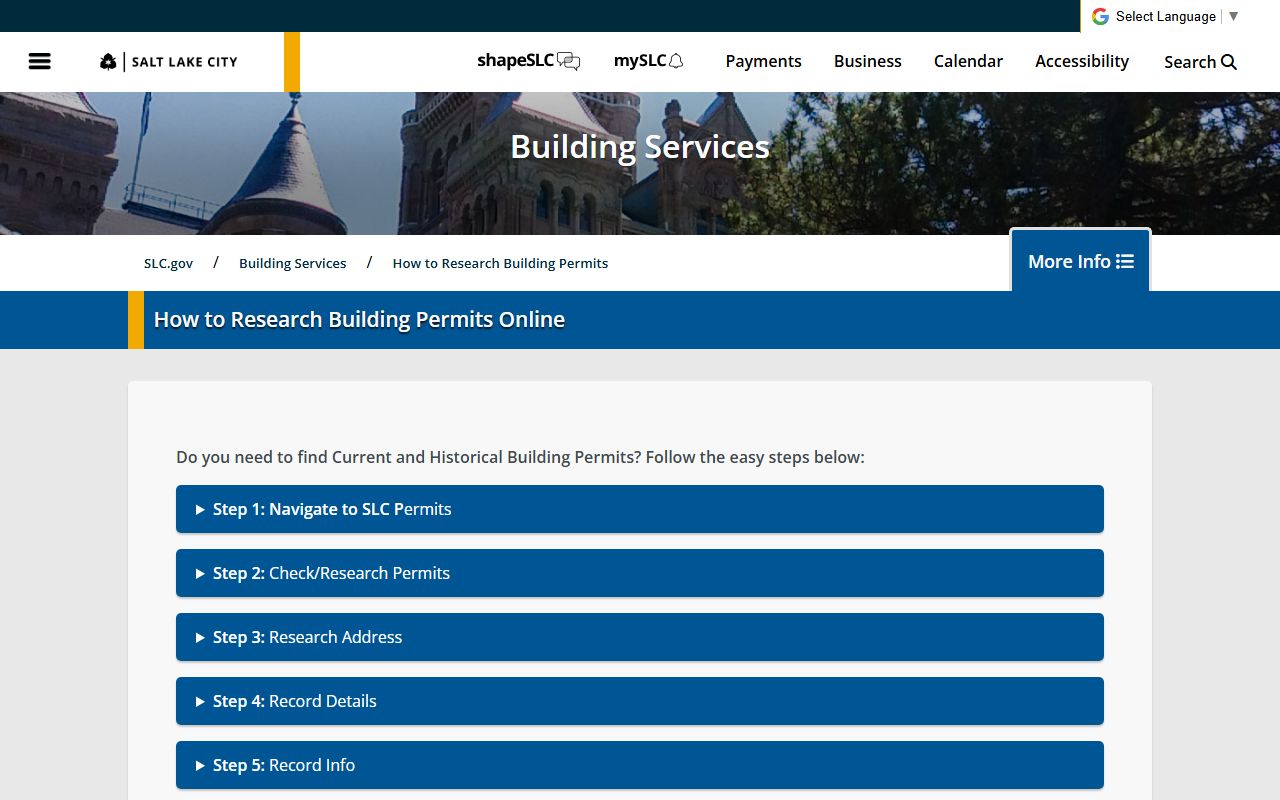
The Salt Lake City Building Services department provides an online guide for researching permits at slc.gov/buildingservices. This guide walks through the steps to look up permit history for any address in the city. While building permits are not deed records, they are a useful companion resource when you are doing full property due diligence in Salt Lake City.
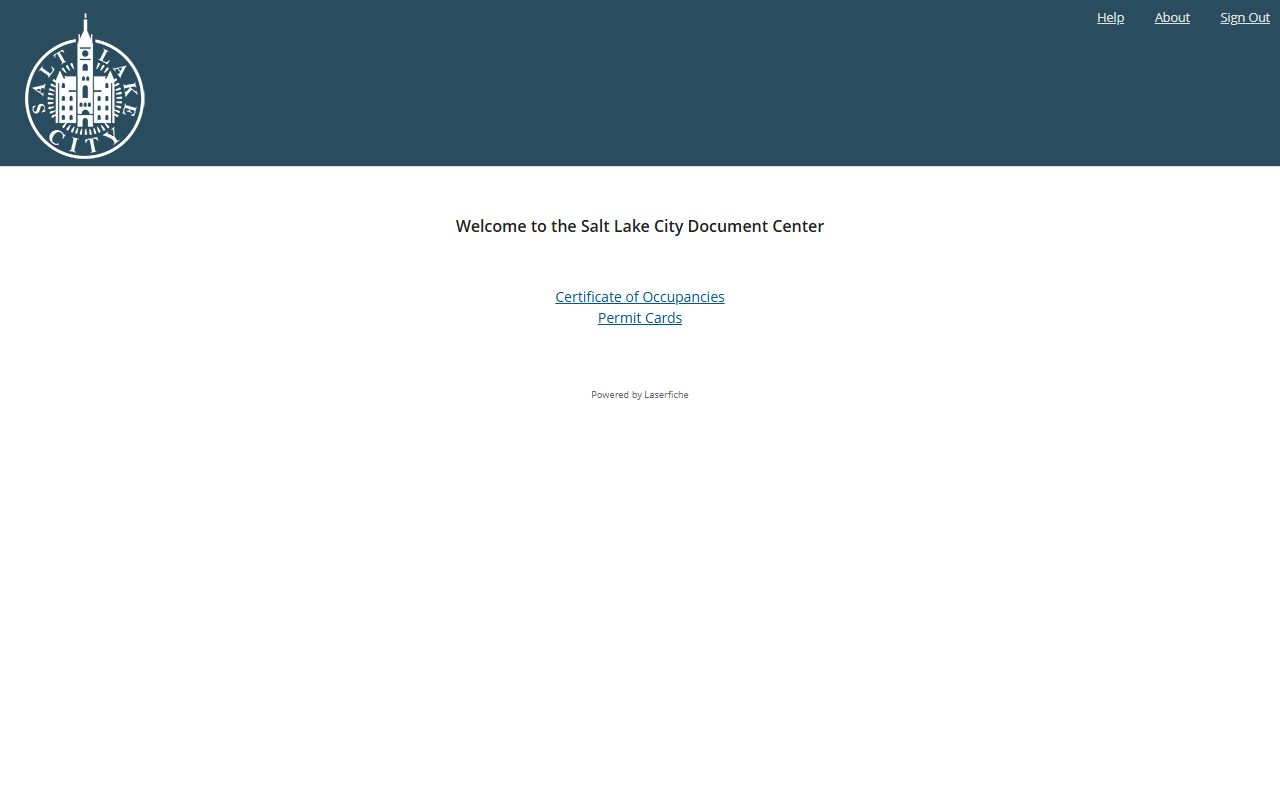
For older properties, the city also maintains a historical building permit search tool at webdme.slcgov.com/BldgPermitHistory. This system indexes permits going back many decades and can surface records of past additions, structural work, or demolition that might affect the value or legal status of a parcel. Combining permit history with deed records gives a more complete picture of a property's past.
Note: Building permits are issued and managed by Salt Lake City, while deed records are held by Salt Lake County; these are separate systems and must be searched independently.
Public Access to Deed Records Under Utah Law
Deed records in Utah are public records. The Government Records Access and Management Act, known as GRAMA, governs public access to records held by government agencies in Utah, including county recorders. Under GRAMA, any person may request access to recorded property documents without stating a reason. The county recorder must respond to a records request promptly and may charge only the actual cost of duplication.
This open-access framework is reinforced by the recording statutes themselves. Under Section 57-3-102 of the Utah Code, every recorded document imparts constructive notice to the world. That means anyone who searches the county records is presumed to know the contents of any recorded deed, lien, or encumbrance. The practical effect is that deed records must be accessible, because the law treats them as notice to the public.
The Utah State Archives also preserves historical government records, including some early county recorder documents. For very old Salt Lake City property records, the State Archives may hold materials that supplement what the county has on file. Additionally, the Utah GIS portal provides parcel mapping data that can help you identify a parcel number before running a deed search at the county level.
Salt Lake County Deed Records for City Properties
Every deed recorded for a Salt Lake City property is part of the Salt Lake County deed records system. If you are doing a title search, resolving an ownership dispute, confirming an easement, or simply checking who holds title to a parcel, the county recorder's office is your starting point. The online Data Services portal covers the modern record set, and in-person access covers the full historical archive. For a complete view of what the county holds, visit the full county records page linked below.
View Salt Lake County Deed RecordsNearby Cities in Salt Lake County
Salt Lake City shares the Salt Lake County Recorder system with many neighboring cities. Deed records for all of these communities are held in the same county office and are searchable through the same Data Services portal.