
Deed Records in San Juan County
San Juan County deed records document the ownership, transfer, and encumbrance of real property across the largest county by area in the state of Utah. Established in 1880, the county covers a vast stretch of southeastern Utah that includes canyonlands, high desert mesas, portions of the Navajo Nation, and Bears Ears National Monument. The San Juan County Recorder's Office in Monticello maintains the official land records for this expansive region. Under Utah Code Title 57, all documents affecting real property in San Juan County must be recorded with the County Recorder to provide constructive notice and to establish legal priority of ownership.
San Juan County Quick Facts
San Juan County Deed Records Overview
San Juan County covers more land area than any other county in Utah. Its southeastern borders touch Colorado and New Mexico, and the county includes portions of the Navajo Nation, which adds a layer of complexity to property research not found in most other Utah counties. The county seat, Monticello, sits on a high plateau in the northern part of the county. Established in 1880, San Juan County has deed records dating back to its founding, covering more than 140 years of land transfers across this vast and diverse landscape.
Utah uses a race-notice recording system for property documents. Under § 57-3-103, a buyer who records first and had no prior notice of an earlier unrecorded claim takes priority over that earlier claimant. Under § 57-3-102, a recorded document gives constructive notice to all persons. This framework makes the San Juan County deed records a live legal record, not just a historical archive. Buyers, lenders, title companies, and attorneys all rely on these records when property in the county changes hands. Given the county's large area and complex land ownership patterns, careful deed record research is especially important before any transaction closes.
San Juan County deed records include warranty deeds, quitclaim deeds, trust deeds, deeds of reconveyance, mechanic's liens, judgment liens, easements, subdivision plats, and mining claims. Mining claims are a particularly notable feature of the county's historical records, given the long history of uranium, oil, and mineral extraction in southeastern Utah. Historical deed records in San Juan County go back to 1880 and document the earliest phases of private land ownership in the region.
Note: Property research in San Juan County requires careful attention to land ownership patterns, since portions of the county include trust land, Navajo Nation land, and federal land managed by the BLM. Not all land in the county is privately held or subject to standard state recording rules.
San Juan County Recorder's Office
The San Juan County Recorder's Office is located at 117 South Main Street in Monticello. Staff record, index, and maintain all land documents for the county. The office provides certified copies of recorded instruments to the public and assists with deed index searches. Because the county covers such a large geographic area, many requests come from out-of-area researchers, title companies, and attorneys who cannot easily visit in person. The recorder's staff can assist with copy requests submitted by mail or phone for many document types.
To record a document in San Juan County, the document must meet Utah's recording requirements under Title 57. It must carry original signatures with notarial acknowledgment. A complete legal description and the parcel serial number from the San Juan County Assessor are required. The grantee's mailing address must also appear on the document. Documents that fail any of these requirements will be returned unrecorded. Under § 57-3-101, a document affecting real property in San Juan County must be recorded with the county recorder to be part of the chain of title and to provide constructive notice to future buyers and lenders.
| Address | 117 South Main Street, Monticello, UT 84535 |
|---|---|
| Phone | (435) 587-3227 |
| Documents Recorded | Deeds, mortgages, liens, mining claims, easements, and other land records |
| Historical Records | Dating to 1880 |
| Copies | Certified copies available; fees apply |
San Juan County Assessor and Property Assessment
The San Juan County Assessor's Office shares its address with the recorder at 117 South Main Street in Monticello. The assessor determines the taxable value of all real property in the county each year. In San Juan County, this is a complex task because the county includes a wide variety of property types, from small residential lots in Monticello and Blanding to vast ranches, uranium mining properties, oil and gas leases, and recreational parcels near natural landmarks like Monument Valley, Canyonlands, and the San Juan River.
Trust land and reservation property assessments involve special procedures in San Juan County due to the presence of Navajo Nation land within the county's boundaries. Agricultural property on private land is also assessed using income-based methods that reflect the land's productivity for grazing, dry farming, or irrigated crops. Mining property assessments take into account mineral rights, extraction history, and current resource values. Buyers of any type of property in San Juan County should review assessor records alongside deed records to understand how the property is currently classified and valued for tax purposes.
| Address | 117 South Main Street, Monticello, UT 84535 |
|---|---|
| Phone | (435) 587-3221 |
| Focus | Agricultural, mining, trust land, and recreational property assessments |
Federal Land and Deed Records in San Juan County
A very large share of San Juan County is federal land. The Bureau of Land Management administers millions of acres in the county, including the canyon country that forms some of the most dramatic landscapes in the American West. Bears Ears National Monument, managed jointly by the BLM and the U.S. Forest Service, covers a significant portion of the county. Federal land does not appear in the county deed records in the same way that private land does, but the transition from federal to private ownership through land patents is the root of most private title chains in the county.
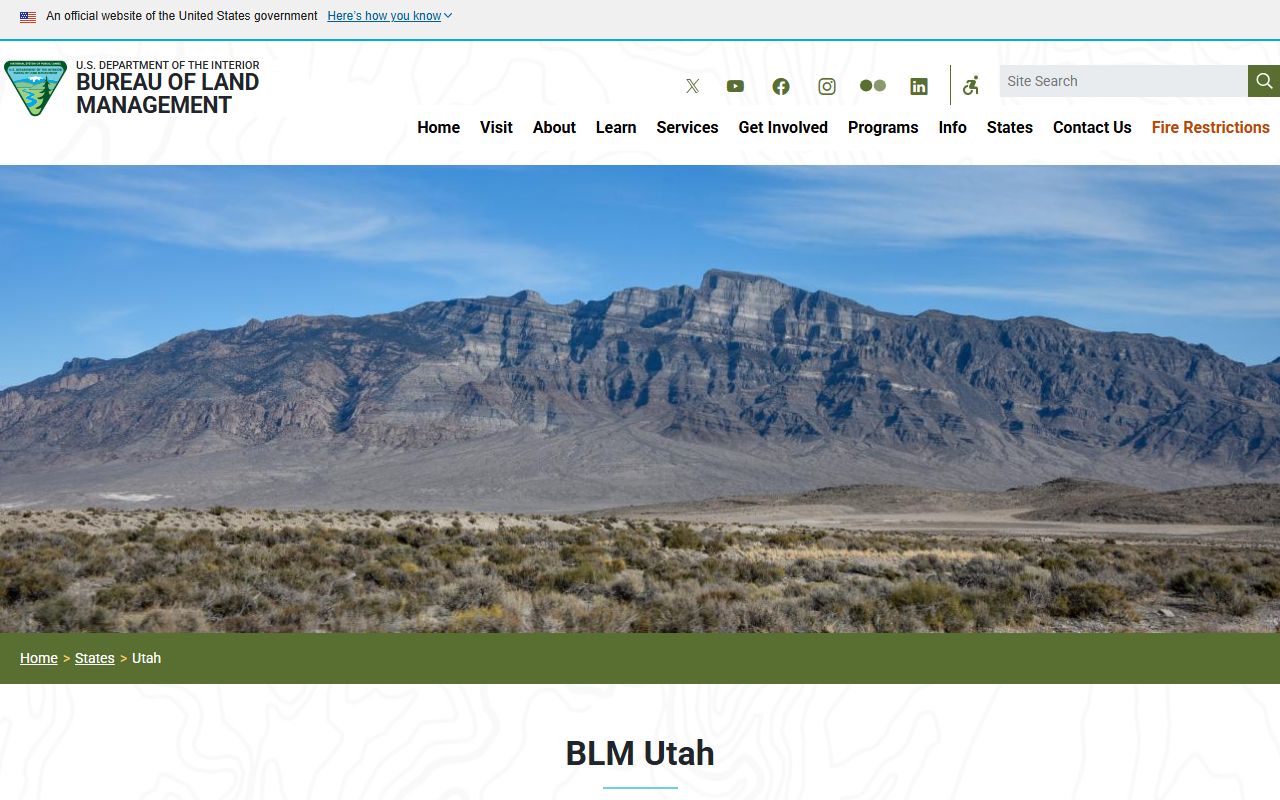
The Bureau of Land Management Utah office maintains records of federal land patents, homestead entries, and mining claims across the state, including San Juan County. For title chains on private land that was originally disposed of through a federal patent, the BLM's General Land Office records provide the oldest link in the chain. These records are digitized and searchable online. Mining claims in San Juan County are also documented through BLM records, which track the filing, maintenance, and abandonment of both lode and placer mining claims on federal land.
Researchers tracing title on remote parcels in San Juan County should begin with the BLM's GLO records to find the original patent, then work forward through the county deed index to trace subsequent private transfers. For ranches and agricultural properties, the BLM grazing records may also be relevant since grazing permits on federal land are often tied to the value and use of adjacent private parcels.
Water Rights and San Juan County Deed Records
Water rights are a critical component of property value in San Juan County, where water is scarce and demand from ranching, farming, and recreation is significant. The Utah Division of Water Rights maintains records of all adjudicated and unadjudicated water rights in the state, including those tied to San Juan County properties. When agricultural or recreational land changes hands in San Juan County, the status of water rights must be carefully reviewed as part of the transaction.
Water rights in Utah are administered separately from land titles. A deed may or may not convey water rights, and the transfer of water rights may require a separate filing with the Division of Water Rights in addition to the deed recorded with the San Juan County Recorder. Buyers of agricultural land, ranches, or properties with irrigation systems in San Juan County should review the Division of Water Rights database alongside the county deed records to confirm what rights, if any, transfer with the property and what filings are needed to complete the transfer.
Note: Under GRAMA § 63G-2-102, San Juan County deed records are classified as public records. Any member of the public may request access to these records at the San Juan County Recorder's Office without needing to state a reason for the request.
Deed Types Recorded in San Juan County
Several types of property instruments appear frequently in San Juan County deed records. Warranty deeds are the standard form used in most sales of private land in the county. The grantor warrants clear title and defends the buyer against future claims from prior periods of ownership. These deeds are common in residential transactions in Monticello, Blanding, and other communities, as well as in sales of agricultural ranches and recreational parcels.
Quitclaim deeds appear in family transfers, estate settlements, and situations where a party wants to release any interest they may hold without making a full title warranty. Trust deeds are used when financing is involved. The borrower conveys an interest in the property to a trustee as security for a loan, and a deed of reconveyance is recorded when the debt is paid off. Mining claims are a distinctive feature of the San Juan County deed records that set the county apart from many other Utah counties. Uranium, oil, gas, and other mineral claims have been filed, maintained, and abandoned across the county over more than a century, and those records are part of the public record.
Easements are also common in San Juan County, where access across neighboring properties is often essential for reaching remote ranches or recreational land. Road easements, pipeline rights-of-way, and grazing access agreements all appear in the recorder's files. These easements run with the land and remain binding on future owners, which makes deed record research essential before buying property in this remote and complex county.
Historical Society and State Resources
The Utah Division of State History maintains research resources related to historic properties, cultural landscapes, and early settlement records across Utah. For San Juan County, which includes some of the most culturally and historically significant land in the state, the division's collections can supplement deed record research with context about early land use, Native American history, and the area's complex settlement patterns.
The Utah State Archives preserves historical government records from all 29 Utah counties. For San Juan County, which has been keeping land records since 1880, the State Archives may hold supplementary materials related to early land administration, territorial surveys, and government documents that predate or complement the county recorder's deed index. Researchers working on pre-statehood transactions or early mining claim history may find the State Archives a useful resource alongside the county deed records.
Nearby Counties with Deed Records
San Juan County borders several other Utah counties. Property near a county boundary, or research that spans multiple regions, may require checking neighboring recorder's offices as well.